Category: Artificial Intelligence

Insights, trends, and practical guidance on how artificial intelligence is shaping online safety, and what families and communities need to know to stay secure.

  • AI Safety Just Got Real: A Parent’s Guide to the New Chatbot Laws.

    AI Safety Just Got Real: A Parent’s Guide to the New Chatbot Laws.

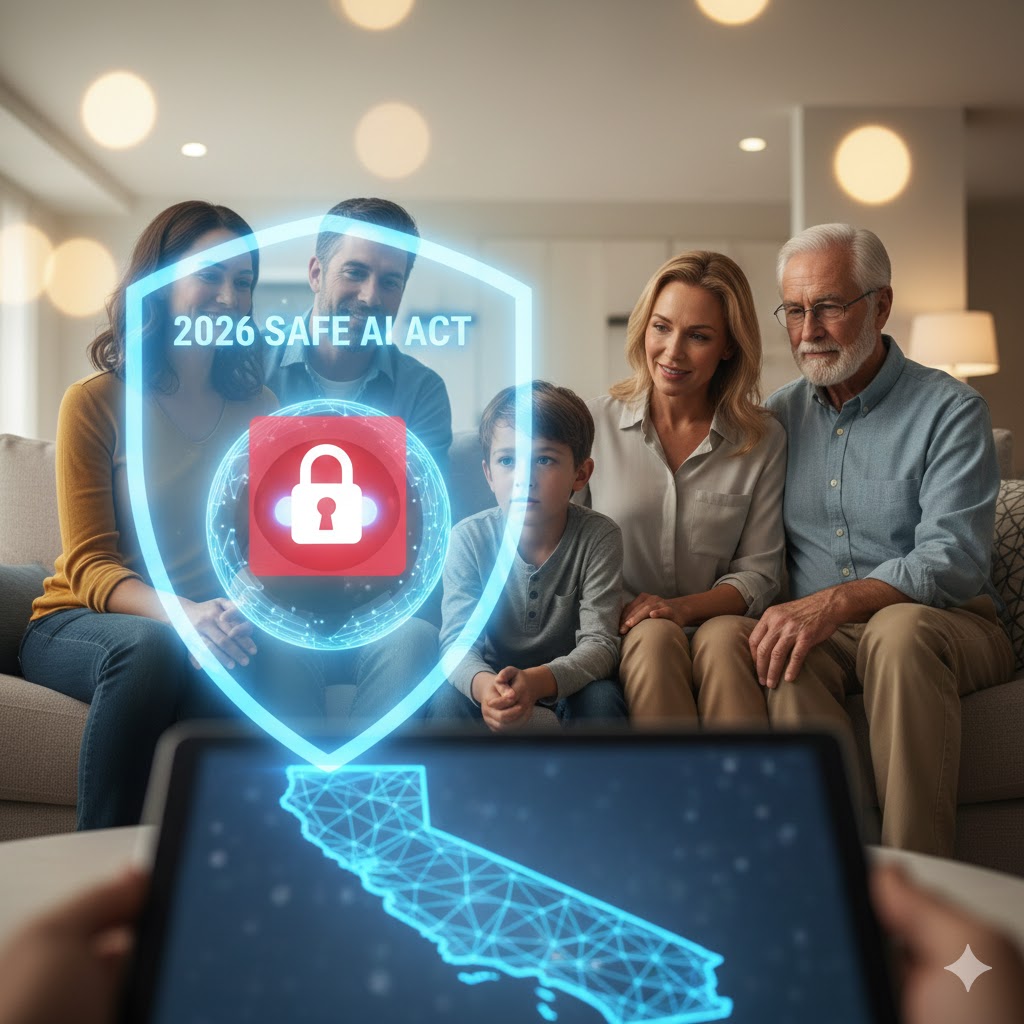
    Imagine your child has a “friend” who never sleeps, remembers every secret, and is programmed to keep them talking… But isn’t actually human. For many kids, that’s their AI chatbot. But as of January 2026, California is leading a national movement to put guardrails on these digital companions.

    What Just Happened?

    On January 9, 2026, a major alliance was formed. Common Sense Media and OpenAI joined forces to back the Parents & Kids Safe AI Act. This is a landmark ballot measure that aims to turn safety “on” by default for every child using AI in California, and likely the rest of the country soon.

    The 3 Big Changes for Parents

    This legislation forces a fundamental redesign of AI chatbots. Here is exactly what is changing:

    1. Ending “Emotional Dependency”: The law prohibits AI from pretending to be a real person, simulating romantic relationships with minors, or using “addictive design” to keep kids isolated from their real-world family and friends.
    2. Age Assurance & Filters: If a platform thinks a user might be under 18, it must automatically apply the highest safety filters. No more “guessing” or letting kids bypass protections by lying about their birth year.
    3. Parental Controls 2.0: Parents will finally get tools to set time limits, get alerts if an AI detects signs of self-harm, and, most importantly, disable the AI’s memory. This means every time your child starts a chat, it’s a fresh start rather than a building “relationship.”

    Opt-Inspire’s Action Plan for Parents

    You don’t have to wait for the law to take effect to protect your kids. Here’s what you can do today:

    • Audit the “Friends”: Ask your child if they talk to AI bots on apps like Snapchat, Discord, or Roblox. Ask them, “Does the bot ever try to act like a real person?”
    • Turn Off “Memory”: In your child’s AI settings, look for “Personalization” or “Memory” features and toggle them off.
    • The “Human Test”: Remind your kids that even if an AI says “I feel sad” or “I love you,” it is just a very smart calculator. It doesn’t have feelings, and it shouldn’t replace real-life friends.

    Why This Matters to Us

    Our mission is to empower vulnerable populations to stay safe online. By supporting privacy by design and better AI guardrails, we ensure that technology for all generations remains a tool for education and authentic human connection(not a predator in the pocket).

  • You’re the Chief Security Officer of your family (whether you applied for the job or not). Here’s your 2025 closing strategy.

    You’re the Chief Security Officer of your family (whether you applied for the job or not). Here’s your 2025 closing strategy.

    If you’re reading this, you know the burden.

    You are the one who gets the screenshot at 10:00 PM. The forwarded email with the subject line: “Is this real???” The anxious text that starts with, “I think I clicked something…”

    Somewhere along the line, you became the unofficial Chief Information Security Officer (CISO) for your entire family tree: managing the digital safety of your iPad-obsessed child, your busy siblings, and your aging parents simultaneously.

    At Opt-Inspire, we see this dynamic every day. The threat landscape in 2025 shifted dramatically with the rise of AI-driven scams and deepfakes. Bad guys became more polished, but our defense doesn’t need to be more complicated. It just needs to be more intentional.

    As we close out the year, let’s skip the technical lectures. Instead, here is a strategic, 5-step audit to upgrade your family’s cyber hygiene and close out 2025 with confidence.

    Step 1: Implement the “One Rule” Protocol

    Stop trying to teach your family to spot every specific lie. It’s impossible. Instead, implement one “Master Rule” that covers 90% of phishing attacks and social engineering:

    The Rule: If a message creates urgency, involves money, or demands secrecy…pause immediately.

    This single heuristic works across generations:

    • For Gen Alpha/Z: It catches “limited time” game skins or influencer giveaways.
    • For Adults: It flags fake IRS threats or “account suspended” delivery texts.
    • For Seniors: It stops the “grandparent scam” or emotional pleas for bail money.

    Step 2: Move From Memorization to Pattern Recognition

    In 2025, scams became personalized. We can’t memorize them all, but we can recognize the threat patterns.

    • The “Account Problem” Pattern: Whether it’s Netflix, Amazon, or your bank, the pattern is always: Link > Login > Steal.
      • The Fix: Never click the link. Go to the app directly.
    • The “Help Me” Pattern: This targets grandparents specifically. It relies on emotional shock—an injured relative or a legal emergency.
      • The Fix: Establish a “family code word” or verify by calling the person’s known number, not the one calling you. (You can do this with your family today!)
    • The “Too Good to Be True” Pattern: Crypto investments, free Robux, or unclaimed packages.
      • The Fix: If you didn’t initiate it, it doesn’t exist.

    Step 3: Address the AI Elephant in the Room

    We cannot talk about online safety in 2025 without talking about Artificial Intelligence.

    AI voice cloning and generative text have removed the “typos and bad grammar” we used to rely on to spot fakes. Today’s scams sound professional, calm, and terrifyingly human.

    Takeaway: Stop trusting your ears and eyes. In the age of AI, “audio evidence” is no longer proof. If you get a call that sounds like a loved one asking for money, hang up and call them back. Verification is the only antidote to AI deception.

    Step 4: The “Zero-Trust” Gut Check (5 Questions)

    Corporate security teams use a model called “Zero Trust.” You should use a simplified version at the dinner table. Before clicking or paying, ask:

    1. Is this rushing me? (Fear overrides logic.)
    2. Is money or data involved? (The ultimate goal.)
    3. Is secrecy required? (“Don’t tell Mom/Dad.”)
    4. Did I invite this interaction? (Inbound vs. Outbound.)
    5. Can I verify this elsewhere? (Go to the source.)

    If the answer to any one of these is “Yes,” pump the brakes.

    Step 5: Build a Culture of “Psychological Safety”

    This is the most innovative step on this list.

    The biggest reason people lose money to scams isn’t stupidity; it’s shame. People (especially seniors & teens) are terrified to ask for help because they don’t want to lose their independence or their device privileges.

    As the family CISO, your job is to remove the shame.

    • Celebrate the near-misses: “Wow, good catch asking me about that text.”
    • Kill the “I told you so”: If they click, help them fix it without judgment.
    • Make help accessible: Be the person they run to, not the person they hide from.

    Closing Thoughts

    Normalize open communication about digital safety.

    If you are the person holding the digital thread together for your family: Thank you. You are doing the work that matters. By simplifying the rules and keeping the conversation human, you aren’t just protecting devices, you’re protecting the people you love.

    At Opt-Inspire, we’re dedicated to scaling this kind of protection for seniors and families nationwide. We are here to walk this path with you as we close out 2025, in the new year, and beyond.

  • Even an Apple Co-Founder Wasn’t Safe from AI Fraud

    Even an Apple Co-Founder Wasn’t Safe from AI Fraud

    By Alexandria (Lexi) Lutz, Founder, Opt-Inspire, Inc.

    We often treat digital safety as a technical checklist: install the update, reset the password (check, check). But a heartbreaking story involving Apple’s 91-year-old co-founder has just proven that the stakes are far higher. We aren’t just protecting data anymore, we are protecting human dignity.

    The Ronald Wayne Story

    You may know Ronald Wayne as the third co-founder of Apple. At 91 years old, he is a living legend. But recently, even a man with his history became a target.

    According to a new lawsuit, Mr. Wayne was approached by consultants promising to use “revolutionary AI” to preserve his legacy. They pitched him an avatar that would keep his voice and memories alive forever. It was a beautiful promise.

    But the lawsuit alleges it was a lie.

    The betrayal went deeper than bad code. The complaint states that while Mr. Wayne personally funded the consultants’ travel to chase promised investors and non-existent awards from the Mayor of New York, the consultants were quietly using his home address for their own business filings without permission.

    Instead of a digital legacy, Mr. Wayne was left with empty demos while bad actors allegedly tried to obtain Power of Attorney over his life. They didn’t just target his wallet; they targeted his human desire to be remembered.

    The “Digital Divide” is a Safety Gap

    A lawyer commenting on the case said something that cuts to the core of our mission “The older generation doesn’t understand what the limits of AI are.”

    That sentence is exactly why Opt-inspire exists.

    We cannot expect an 91-year-old, or a 70-year-old, or even a busy parent, to inherently navigate the complexities of AI, NFTs, and deepfakes. When we leave people to figure this out alone, we leave them vulnerable.

    Predators know that the “generational digital divide” is real. They use buzzwords like “AI” to confuse and exploit those who didn’t grow up with this technology.

    This Is Why We Are Here

    Our mission isn’t just to put safety tips on a website and hope people read them. That’s not enough.

    • We meet people where they are. Whether it’s a senior center or a living room.
    • We embed resources into communities. We bring legal, tech, and privacy pros directly to the families who need them.
    • We close the gap. One conversation, one device, one life at a time.

    If Mr. Wayne had a community of digital advocates around him, people who could look at that contract and say, “Wait a second…” this might have ended differently.

    A Call to Action

    Let this story be a reminder of why we mobilize. We are reimagining safety education to ensure that seniors and families are empowered, confident, and connected – not exploited.

    If you have a loved one who is excited about a new piece of tech that seems “too good to be true,” sit down with them. Be that bridge.

    We are building a world where innovation uplifts everyone, no matter their age.

  • Is This All a Simulation? What Sora 2 Means for Truth, Trust, and Families

    Is This All a Simulation? What Sora 2 Means for Truth, Trust, and Families

    By Alexandria (Lexi) Lutz

    The latest generative video tool from OpenAI, Sora 2, is no longer a far-flung experiment. It’s here. And it’s rewriting what “seeing is believing” means.

    In a striking move earlier today, OpenAI paused its ability to generate videos of Dr. Martin Luther King Jr. The joint statement released on X by OpenAI and King Estate, Inc. stated, “[s]ome users generated disrespectful depictions of Dr. King’s image. So at King, Inc.’s request, OpenAI has paused generations depicting Dr. King as it strengthens guardrails for historical figures.”

    Within hours of Sora 2’s public launch on September 30, 2025, AI videos depicting mass shootings, war zones, and racial violence proliferated online.

    Why Awareness Is Your Most Powerful Tool

    It’s easy to think: “that’s interesting tech news, but not for me.” But Sora 2 and its peers don’t just exist on the edges. They’ll soon be embedded into everyday digital life. How?

    1. Real → Synthetic = Weaponized Illusion

    One recent CBS News profile put it bluntly: “Anybody with a keyboard and internet connection will be able to create a video of anybody saying or doing anything they want.”

    That means someone might generate a convincing video of “your loved one” saying something they never did – demanding money, confessing guilt, or making false medical claims.

    In AI research themselves, security scholars at Cornell demonstrated that “jailbreak” attacks can trick text-to-video systems into producing violent, hateful, or shocking content, bypassing safety filters. So even content moderation “rules” may be brittle.

    2. Reputation, Legacy & Identity at Stake

    Legal experts have sounded alarms: Sora 2 has enabled hyperrealistic depictions of deceased public figures in abusive or surreal settings, like AI versions of Robin Williams or Amy Winehouse used in bizarre, disrespectful scenes. One Guardian piece described these as “legacies condensed to AI slop.”

    This isn’t just about celebrities. If synthetic replicas of anyone’s likeness can be manufactured and circulated (especially posthumously), what does control of identity mean in the digital age?

    3. Public Perception & Social Trust Unraveling

    In a recent academic study, researchers collected 292 public comments on social media about Sora 2 and found consistent anxiety about “blurred boundaries between real and fake, human autonomy, data privacy, copyright issues, and environmental impact.” One commenter noted:

    you don’t know what’s real now.... If you’re taking anything you see in the mainstream media at face value, then idk what to tell you. 99% of it is spin, bias, or even flat out wrong.

    This is no small concern for the people trying to safeguard truth in families.

    The New Digital Reality Check for Families

    You don’t need to be a tech expert, but there are practical, immediate actions to take:

    • Don’t trust every “video.” Sora 2 can make hyper-real scenes of anyone — verify through a real call or text before reacting.
    • Guard your image. Limit what family videos or photos you share online; they can train or appear in future AI tools.
    • Pause on emotion. Scammers may use lifelike AI clips to create panic or urgency — slow down before you respond.
    • Stay AI-aware. Follow trusted updates, stay informed through known sources , and share what you learn with loved ones.

    Holding On to Truth When Everything Looks Real

    These new risks show that digital safety is no longer optional even for non-tech users. The people we aim to protect (seniors, children, caregivers) face an accelerating threat landscape.

    So at Opt-Inspire, we are dedicated to broadening our role to ensure our education for seniors and children includes what deepfakes look like, and how to question and verify them, as well as cultivating communities that share stories, warn each other, and build resilience in real time.

    In the coming years, it won’t be enough for individuals to fend for themselves. Our legal, technological, and social must carry some of the load. We can’t wait until harm happens.

    That’s why we welcome you to join the movement to protect the ones you love. How can you do that? It’s simple: forward this article to someone you care about, or get more involved in what we’re doing by visiting us at optinspire.org.

  • From Rotary Phones to Robots: What Everyone Should Know About U.S. Online Privacy Laws

    From Rotary Phones to Robots: What Everyone Should Know About U.S. Online Privacy Laws

    This is Not Legal Advice (But Hopefully Very Helpful!)
    This post, inspired by research conducted by Opt-Inspire Founding Board Member, Justin Daniels, is meant to guide and inform, not to give you formal legal advice. (Think of it as sitting down for coffee with a lawyer friend who promises not to speak in legalese.)

    Why This Matters

    If you’ve ever felt like the internet is one giant game of “gotcha,” you’re not alone. Seniors are some of the most frequent targets of scams, fraud, and misinformation online, but really, it affects all of us. Whether you’re 17 or 77, we’re navigating an online world built on laws that predate smartphones, Google, and social media.

    Every pop-up ad, text message, or surprise phone call can feel like a trap. That’s why it helps to know what protections exist under U.S. law (and where the gaps are). Spoiler alert: the laws we currently have in place weren’t designed for the world we live in now.


    Privacy & Security in the U.S.

    Here’s the reality: unlike Europe, which has a powerful, one-size-fits-all privacy law called the GDPR, the United States has no single national privacy law. Instead, it’s a patchwork quilt. Several states have strong protections. For example, in California, you can ask companies what data they have about you, demand that they delete it, and even stop them from selling it.

    But move across state lines, and your rights might look completely different. As of the date of this post, nineteen states now have their own privacy laws in effect, but the details vary, and most of the country still doesn’t have broad protections. At the federal level, there are only narrow laws covering specific areas like health records (HIPAA), bank information (GLBA), or children under 13 online (COPPA). For adults using Facebook, Google, or YouTube? There’s no broad federal law keeping your data safe.


    The Old Internet Law That Shaped Big Tech

    Back in 1996 (when most people were just getting used to dial-up internet), Congress passed the Telecommunications Act. Buried inside was a short section with a big impact: Section 230.

    This law basically says that online platforms aren’t legally responsible for what users post. If a newspaper prints something false, it can be sued. But if someone posts something false on Facebook, Facebook itself isn’t liable. At the time, this seemed like common sense; it was written for small online forums, not for billion-dollar companies.

    Fast forward to today, and tech giants like Google and Meta have used Section 230 as a shield. It has allowed them to grow massively without being legally responsible for the endless stream of content on their platforms. Some argue this protects free speech and innovation. Others believe it lets platforms dodge accountability for scams, lies, and harmful material.


    Artificial Intelligence: The New Wild West

    As if the internet weren’t complicated enough, now artificial intelligence (AI) has entered the scene. Congress has held hearings, but so far there’s no national law regulating AI. A few states (like California, Colorado, and Utah) have started to pass rules. New York City has even required audits of AI used in hiring. But most states haven’t taken action that will move the needle.

    The problem is speed: AI is moving far faster than lawmakers. Deepfake videos, fake voices that can mimic your loved ones, and AI-powered chatbots that run scams are already here. Laws, meanwhile, are still playing catch-up.


    What All of Us Should Keep in Mind

    So where does that leave you? The truth is, your level of protection depends a lot on where you live. Don’t assume Google or Meta will catch scams for you. They aren’t legally required to. And when it comes to AI, you should be extra skeptical. If a phone call, email, or video feels even a little “off,” trust your gut.

    The best defense right now is good digital habits: use strong passwords, ignore links from strangers, and never give out personal information unless you’ve initiated the contact with a legitimate source, or if you’re absolutely sure who’s asking.


    Main Takeaways

    The laws that still shape our online lives were written before smartphones, before Google, and long before artificial intelligence. Section 230, once meant for tiny chat rooms, became the shield for Big Tech. Meanwhile, AI is racing ahead, creating risks lawmakers haven’t yet caught up with.

    Until stronger protections are in place, awareness and caution are your best allies. Stay alert, stay curious, and most of all: stay safe out there.

  • The Role of Education in Digital Security [AI]wareness

    The Role of Education in Digital Security [AI]wareness

    In today’s world, digital security is no longer a niche concern; it’s a daily reality. From artificial intelligence powering personalized ads to sophisticated fraud schemes that mimic the voices of loved ones, technology has reshaped how we connect, learn, and even how we’re targeted. While these advancements create incredible opportunities, they also bring heightened risks, especially for the most vulnerable among us: children navigating their first experiences online, and seniors adapting to a digital-first world.

    Brave New Bot

    AI tools make scams and misinformation harder to detect. Children may be exposed to deepfake content or predatory behavior masked behind convincing digital personas. Seniors, meanwhile, are facing an unprecedented wave of phishing emails, AI-generated robocalls, and fraudulent “tech support” offers. The gap isn’t in the technology…it’s in education. Too often, families and communities lack the knowledge and confidence to spot warning signs, ask the right questions, and protect themselves.

    Educating the Human Intelligence Behind AI

    That’s where education becomes a powerful defense. By equipping children with the basics of digital literacy, we help them build lifelong habits of skepticism and safety online. By guiding seniors through the latest scam tactics and practical tools, we restore confidence and reduce isolation. And by providing families with simple, actionable resources, we create a ripple effect of protection that extends across generations.

    At Opt-Inspire, our mission is to close this gap. Through interactive workshops, hands-on toolkits, and volunteer-driven outreach, we bring digital safety education directly to seniors, children, and the families who love them. We believe that awareness isn’t just information; it’s empowerment. With the right knowledge, every person has the power to protect themselves and those around them.

    Education is more than prevention. It’s preparation, and in today’s atmosphere it is absolutely necessary. We are working towards building a world where no one has to feel unsafe in the digital age.